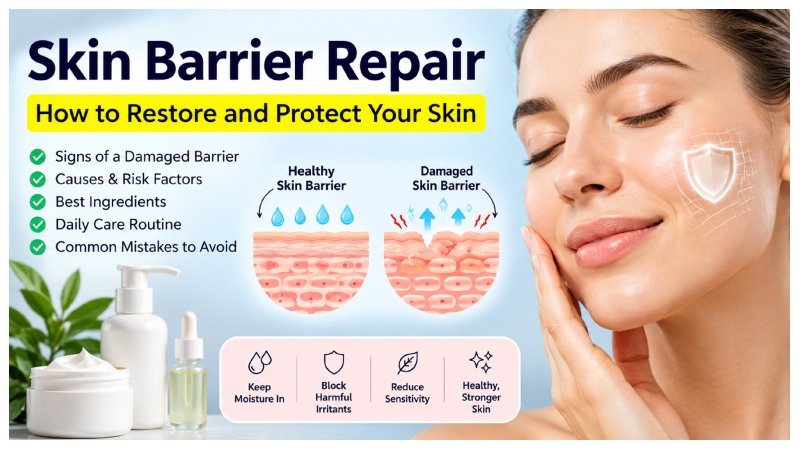
Your skin has a natural protective layer that helps keep moisture in and irritants out. This layer is commonly called the skin barrier. When it becomes weakened, your skin may feel dry, tight, itchy, rough, or unusually sensitive.
Many skincare problems can become harder to manage when the skin barrier is damaged. Harsh cleansers, over-exfoliation, hot water, irritating products, and environmental stress can all contribute to barrier damage. The good news is that a simple and gentle routine can support the skin while it recovers.
This guide explains how the skin barrier works, how to recognize damage, what can weaken it, and how to build a practical skin barrier repair routine.
What Is the Skin Barrier?
The skin barrier is the outermost part of your skin. It sits within the outer layer called the stratum corneum and contains skin cells, lipids, proteins, and other components that help protect the tissue underneath.
A useful way to understand it is to imagine a brick wall. The skin cells act like bricks, while lipids such as ceramides, cholesterol, and fatty acids help fill the spaces between them.
A healthy barrier helps reduce moisture loss and protects your skin from external irritants. When that structure becomes disrupted, water can escape more easily and the skin may become more vulnerable to irritation.
How Do You Know Your Skin Barrier Is Damaged?
Not every skin problem means your barrier is damaged. However, several signs can suggest that your skin needs a gentler routine.
Common signs include:
- Dryness or flaking
- Tightness after cleansing
- Rough or uneven texture
- Increased sensitivity
- Redness or irritation
- Itching
- Stinging when skincare products are applied
- Tender or uncomfortable skin
Cleveland Clinic notes that irritation, inflammation, rough patches, dryness, sensitivity, and stinging can occur when the skin barrier is compromised.
If your symptoms are severe, persistent, painful, or associated with a diagnosed skin condition, it is better to speak with a dermatologist rather than relying only on cosmetic skincare.
What Damages the Skin Barrier?
Your daily habits can have a major effect on your skin barrier. You do not necessarily need a complicated skincare routine to damage it. Sometimes, doing too much can be the problem.
Over-Exfoliation
Exfoliating can improve the appearance of skin texture, but frequent or aggressive exfoliation may increase irritation.
Using several exfoliating products at once can be especially difficult for sensitive skin. If your skin feels raw, burns easily, or becomes unusually tight after your routine, consider reducing unnecessary exfoliation.
Harsh Cleansers
Some cleansers can remove too much of the skin’s natural oil. Strong soaps and overly aggressive cleansing may leave skin feeling dry and uncomfortable.
A gentle, fragrance-free cleanser can be a better choice when your barrier is irritated. Cleveland Clinic dermatology guidance recommends gentle cleansing rather than harsh soaps when caring for a damaged barrier.
Hot Water
Long, hot showers may feel relaxing, but hot water can contribute to dryness by removing natural oils from the skin.
Use lukewarm water instead, especially when your skin is already dry or sensitive.
Too Many Active Ingredients
Retinoids, exfoliating acids, acne treatments, and other active ingredients can have a place in skincare. However, using several powerful products together may increase irritation.
If your skin suddenly becomes sensitive, simplifying your routine can make more sense than adding another treatment.
Skipping Moisturizer
Moisturizer is not only for people with dry skin. A suitable moisturizer can help support hydration and reduce moisture loss.
Ingredients such as ceramides can be particularly useful because ceramides are naturally present in the skin barrier and help support its structure.
Skin Barrier Repair: A Simple Routine
When your skin feels damaged, your routine does not need to become complicated. The goal is to reduce unnecessary irritation and support hydration.
Morning Routine
Start with a gentle cleanser if you need one. If cleansing leaves your skin tight or uncomfortable, consider whether you need a cleanser every morning.
Next, apply a moisturizer suited to your skin type. Look for formulas containing barrier-supporting ingredients such as ceramides.
Finish with broad-spectrum sunscreen. Daily sun protection is an important part of protecting your skin from environmental damage.
A simple morning routine can therefore look like:
Gentle cleanser → Moisturizer → Sunscreen
You do not need multiple serums to support your barrier.
Night Routine
At night, remove sunscreen, makeup, and daily buildup with a gentle cleanser.
Apply moisturizer while your skin is slightly damp. Moisturizing after washing can help support hydration.
If your skin is irritated, consider temporarily reducing products that cause burning, stinging, or noticeable dryness.
A simple evening routine can be:
Gentle cleanser → Moisturizer
Once your skin feels comfortable again, you can gradually reintroduce other products if they are appropriate for your skin.
Which Ingredients Support the Skin Barrier?
The ingredient list matters more than an expensive product label. Several skincare ingredients can help support hydration and the skin barrier.
Ceramides
Ceramides are lipids naturally found in the outer layer of the skin. They help support the structure of the barrier and reduce moisture loss.
Cleveland Clinic reports that ceramides make up a substantial portion of the epidermis and are commonly included in moisturizers designed to support the skin barrier.
Glycerin
Glycerin is a humectant. It helps attract and hold water, making it a common ingredient in moisturizing products.
Hyaluronic Acid
Hyaluronic acid is another hydrating ingredient used in many skincare products. It can help increase skin hydration, although hydration alone does not replace the need for a healthy protective barrier.
Dimethicone
Dimethicone is a type of occlusive ingredient that can help reduce water loss from the skin. The American Academy of Dermatology also notes dimethicone as an ingredient used in some barrier repair creams.
Colloidal Oatmeal
Colloidal oatmeal can help soothe irritated and dry skin. The American Academy of Dermatology lists it among ingredients that can be useful for dry or sensitive skin.
What Should You Avoid During Skin Barrier Repair?
When your skin is irritated, adding more products is not always the answer.
Consider reducing or temporarily avoiding products that cause noticeable irritation, especially:
- Harsh scrubs
- Frequent exfoliation
- Strongly fragranced products
- Very hot water
- Multiple new active ingredients
- Aggressive cleansing
- Picking or squeezing irritated areas
This does not mean every active skincare ingredient is harmful. It means your routine should match the current condition of your skin.
If a product consistently causes burning or significant irritation, stop using it and reassess your routine.
How Long Does Skin Barrier Repair Take?
There is no single recovery time that works for everyone.
The amount of damage, your skin type, the cause of the irritation, your routine, and any underlying skin condition can all affect recovery.
Instead of expecting an overnight transformation, focus on whether your skin gradually feels more comfortable. Reduced tightness, less stinging, improved hydration, and fewer dry patches can be encouraging signs.
If your skin continues to worsen despite a gentle routine, professional evaluation may be appropriate.
Can You Repair a Damaged Skin Barrier Naturally?
Your skin has its own repair processes, so supporting those processes is more important than searching for a single miracle product.
A practical approach includes gentle cleansing, regular moisturizing, avoiding unnecessary irritation, and protecting the skin from excessive sun exposure.
A healthy lifestyle also supports overall skin health, but no food, supplement, or home remedy can replace appropriate treatment for an underlying skin condition.
Skin Barrier Repair for Different Skin Types
Dry Skin
Dry skin often benefits from richer moisturizing formulas containing barrier-supporting ingredients such as ceramides and occlusive ingredients.
Avoid excessive cleansing and very hot water.
Oily Skin
Oily skin still needs hydration. Choose a lightweight moisturizer that feels comfortable and does not encourage you to skip moisturizing altogether.
This is particularly important if acne treatments or frequent cleansing are making your skin feel dry.
Sensitive Skin
Sensitive skin generally benefits from a simpler routine. Fragrance-free products and fewer active ingredients may help reduce unnecessary irritation.
Introduce new products gradually instead of changing your entire routine at once.
Combination Skin
Combination skin may need different textures in different areas. A lightweight moisturizer may work well across the face, while drier areas may need additional hydration.
Common Skin Barrier Repair Mistakes
One of the biggest mistakes is trying to fix irritation by adding more products.
Another common mistake is exfoliating frequently because the skin looks rough. Roughness can sometimes be a sign that your skin needs more gentle care rather than more exfoliation.
People also sometimes stop moisturizing because they have oily or acne-prone skin. However, oily skin can still become dehydrated or irritated.
Finally, changing several products at once makes it difficult to identify what is helping or causing irritation.
A simpler routine gives you a clearer picture of how your skin responds.
When Should You See a Dermatologist?
Basic skincare can support the skin barrier, but it cannot diagnose or treat every skin condition.
Consider professional advice if you experience persistent redness, severe itching, painful inflammation, recurring rashes, significant swelling, infection, or symptoms that do not improve.
Conditions such as eczema, rosacea, psoriasis, and acne can affect the skin barrier and may require specific treatment. Cleveland Clinic notes several skin conditions that can be associated with barrier problems.
A dermatologist can determine whether your symptoms are related to simple irritation or an underlying condition that needs targeted care.
Frequently Asked Questions
What is the fastest way to support skin barrier repair?
The most practical approach is to simplify your routine. Use gentle cleansing, moisturize regularly, avoid unnecessary irritation, and protect your skin from the sun.
Are ceramides good for a damaged skin barrier?
Ceramides can help support the skin barrier because they are naturally occurring lipids in the outer layer of skin. They are commonly used in moisturizers designed for barrier support.
Should I stop exfoliating if my skin barrier is damaged?
If exfoliation is causing irritation, reducing or temporarily stopping it can be sensible. Once your skin becomes comfortable again, you can decide whether exfoliation is actually necessary for your skincare goals.
Can oily skin have a damaged barrier?
Yes. Oily skin can still become irritated, dehydrated, or damaged from harsh cleansing, excessive exfoliation, or unsuitable products.
Is sunscreen important during skin barrier repair?
Yes. Sun protection is an important part of maintaining healthy skin and limiting environmental damage. A broad-spectrum sunscreen that you can comfortably use every day is a practical choice.
Can I use retinol while repairing my skin barrier?
If retinol is causing dryness, burning, or irritation, consider pausing it until your skin feels comfortable. People with persistent irritation should discuss their routine with a dermatologist.
Final Thoughts
Skin barrier repair does not have to involve a complicated collection of skincare products. In many cases, the better approach is to simplify your routine and give your skin consistent, gentle care.
Use a mild cleanser, moisturize regularly, avoid excessive exfoliation, and protect your skin from the sun. Ingredients such as ceramides, glycerin, hyaluronic acid, and dimethicone can also play useful roles in a supportive skincare routine.
Most importantly, pay attention to how your skin responds. If irritation persists or you suspect an underlying skin condition, professional dermatology advice is more appropriate than continually experimenting with new products.

Leave a Reply