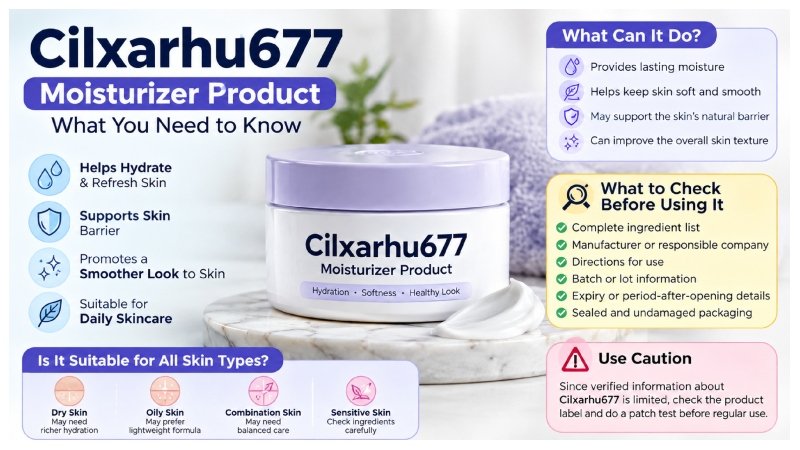
Cilxarhu677 Moisturizer Product: What You Need to Know

Cilxarhu677 Moisturizer Product

Skincare shoppers often search for a moisturizer after seeing an unfamiliar product mentioned online. The cilxarhu677 moisturizer product is one such name that has attracted attention across several websites. People want to know what it is, what it contains, how it works, and whether it is suitable for their skin.

The problem is that reliable information about this product remains limited. Different online articles make different claims about its ingredients, benefits, manufacturer, and use. Without a verified product label or clear manufacturer information, those claims should not automatically be treated as facts.

This guide explains what can reasonably be said about Cilxarhu677, what remains unclear, and what you should check before putting any unfamiliar moisturizer on your skin.

What Is the Cilxarhu677 Moisturizer Product?

Cilxarhu677 is described online as a moisturizer intended for everyday skincare. Articles discussing the product commonly associate it with hydration, smoother-looking skin, and support for the skin barrier.

However, the product does not currently have enough clearly verified public information to confirm its exact formulation or manufacturing background. Some websites publish detailed ingredient lists, while others provide different descriptions.

That inconsistency matters.

A skincare product should ideally have a clearly identifiable manufacturer, complete ingredient information, directions for use, and appropriate product labeling. When those details cannot be independently confirmed, it is better to avoid presenting online claims as established product facts.

Therefore, the most accurate description is that Cilxarhu677 is an online-mentioned moisturizer product whose specific formulation and manufacturer information are not clearly verified.

Why Are People Searching for Cilxarhu677?

Interest in the product appears to come from people looking for information before trying or purchasing it. Most questions fall into a few simple areas.

People want to know whether the product is genuine, what ingredients it contains, what benefits it may provide, how to apply it, and whether it works for oily, dry, or sensitive skin.

These are reasonable questions for any skincare product. They become even more important when reliable product information is difficult to find.

Instead of relying on a single online description, consumers should examine the actual packaging and seller information whenever possible.

What Ingredients Does It Contain?

One of the biggest uncertainties surrounding this product is its ingredient list.

Various online pages mention ingredients commonly found in moisturizers, including humectants, emollients, and ingredients associated with skin-barrier support. However, a complete and authoritative ingredient list for Cilxarhu677 cannot be confidently established from those online claims alone.

This means you should not assume that a particular ingredient is present simply because another website mentions it.

If you have the product in hand, check the ingredients printed on the packaging. The label is a much stronger source for determining the actual formulation.

Ingredient information is particularly important if you have sensitive skin, known allergies, or already use active skincare products.

What Can a Moisturizer Do for Your Skin?

Although the exact formulation of Cilxarhu677 is unclear, moisturizers generally serve an important purpose in a skincare routine.

A good moisturizer can help reduce dryness, improve skin softness, and support the skin’s moisture barrier. Different formulas achieve these effects through different types of ingredients.

Humectants help attract water to the skin. Emollients help smooth the surface. Occlusive ingredients can reduce moisture loss by creating a protective layer.

The right balance depends on the formula and your skin type. A rich cream may feel comfortable on dry skin but heavy on oily skin. A lightweight lotion or gel may feel more comfortable for people who produce more oil.

Is Cilxarhu677 Suitable for All Skin Types?

There is not enough verified information to say that this product works for every skin type.

Your skin’s needs should guide your moisturizer choice.

Dry skin generally benefits from formulas that provide lasting moisture and help reduce water loss.

Oily skin can still need moisturizer. A lightweight, non-comedogenic formula may be more comfortable for people who are prone to clogged pores.

Combination skin may respond well to a balanced moisturizer that hydrates dry areas without feeling excessively heavy on oilier areas.

Sensitive skin requires extra care. Fragrance, preservatives, or certain active ingredients can cause irritation in some people.

Because the exact Cilxarhu677 formula is unclear, it would be inappropriate to guarantee that it suits any particular skin type.

How Should You Use It?

If you have the actual product, follow the instructions printed on its packaging first.

For a typical facial moisturizer, a simple routine usually involves cleansing the skin and then applying moisturizer. Many people apply moisturizer while the skin is slightly damp because this can help retain moisture.

If you are trying an unfamiliar product, avoid immediately applying a large amount across your entire face. Testing a small area first can help you identify whether the product causes irritation.

Stop using the product if you develop significant burning, swelling, persistent redness, or another unusual reaction. Seek professional medical advice if the reaction is severe or does not improve.

Can You Use It With Other Skincare Products?

That depends on the actual ingredients.

A basic moisturizer can usually fit into a routine that includes cleansing and sunscreen. However, people who use retinoids, exfoliating acids, acne treatments, or other active ingredients should pay closer attention to their complete skincare routine.

Without a verified ingredient list for Cilxarhu677, it is impossible to confidently recommend specific ingredient combinations.

Keeping a skincare routine simple can also make it easier to identify which product is causing irritation if a reaction occurs.

How to Check Whether the Product Is Genuine

The lack of clear public information makes product verification especially important.

Before purchasing an unfamiliar moisturizer, examine the packaging carefully. Look for the product name, complete ingredient list, manufacturer or responsible company, directions for use, batch information, and expiry details where applicable.

You should also consider the seller. A product sold through an unknown source with incomplete labeling deserves more caution than one supplied by a transparent and established retailer.

Do not rely on impressive claims alone. Statements such as “clinically proven,” “dermatologist tested,” or “works for everyone” should have credible supporting evidence.

Is Cilxarhu677 a Safe Product?

It would be inaccurate to declare the product completely safe or unsafe without knowing its verified formulation and manufacturing details.

Safety depends heavily on the actual ingredients, product quality, storage conditions, and individual skin sensitivity.

If the packaging does not provide adequate information, consider that a warning sign. You should also avoid products with damaged, leaking, unusually altered, or suspicious packaging.

People with known allergies or existing skin concerns should be particularly cautious when trying an unfamiliar skincare product.

What Should You Look for in a Good Moisturizer?

You do not need a complicated moisturizer to maintain healthy-looking skin. The most useful choice depends on your skin type and individual needs.

For dry skin, look for a formula designed to provide substantial hydration and reduce moisture loss.

For oily or acne-prone skin, lightweight and non-comedogenic options may be preferable.

For sensitive skin, a simple fragrance-free formula may reduce the chance of irritation.

Most importantly, choose a product with transparent labeling. Knowing exactly what you are applying to your skin is more valuable than choosing a product because of an unfamiliar name or attractive online claims.

Frequently Asked Questions

What is Cilxarhu677 moisturizer?

Cilxarhu677 is an online-mentioned moisturizer product. However, reliable public information about its exact manufacturer and complete formulation remains limited.

Are the ingredients of Cilxarhu677 confirmed?

A definitive ingredient list cannot be confirmed from the inconsistent online information currently available. Check the actual product label for the most reliable ingredient information.

Can I use Cilxarhu677 on oily skin?

There is not enough verified information to guarantee that it is suitable for oily skin. If you consider using it, check whether the packaging identifies the formula as lightweight or non-comedogenic.

Can a moisturizer cause skin irritation?

Yes. Any skincare product can potentially cause irritation or an allergic reaction in some individuals. Testing an unfamiliar product cautiously can reduce unnecessary exposure.

How often should moisturizer be used?

The appropriate frequency depends on the product instructions and your skin’s needs. Many moisturizers are designed for daily use, but you should follow the directions supplied with the specific product.

Should I buy Cilxarhu677 if product information is unclear?

Use caution. A moisturizer with a clearly identified manufacturer, complete ingredient list, proper labeling, and trustworthy seller is easier to evaluate before purchase.

Final Thoughts

The cilxarhu677 moisturizer product has gained online attention, but its exact formulation and manufacturer remain difficult to verify from reliable public information. Some websites make detailed claims about its ingredients and benefits, yet those claims should not be treated as confirmed without supporting product documentation.

If you are considering this moisturizer, start with the basics: check the packaging, review the complete ingredient list, verify the manufacturer and seller, and consider whether the formula matches your skin type.

When product information is unclear, transparency should come before marketing claims. A well-labeled moisturizer from a reputable source gives consumers a much stronger basis for making a safe and informed skincare decision.
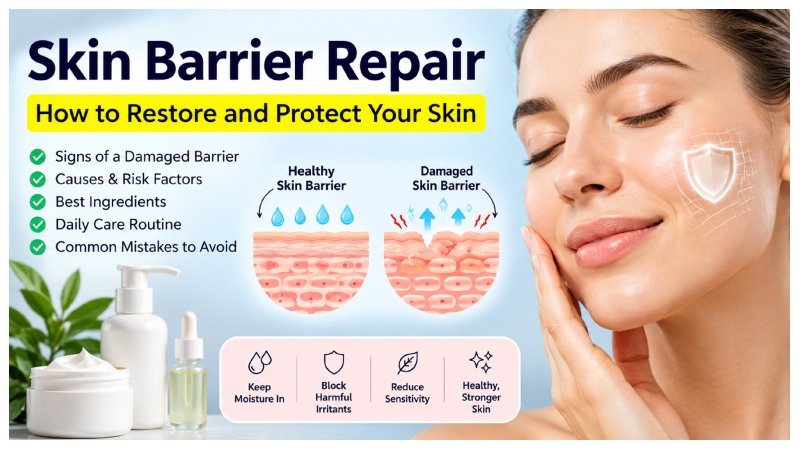
Skin Barrier Repair: How to Restore and Protect Your Skin

Skin barrier repair skincare routine

Your skin has a natural protective layer that helps keep moisture in and irritants out. This layer is commonly called the skin barrier. When it becomes weakened, your skin may feel dry, tight, itchy, rough, or unusually sensitive.

Many skincare problems can become harder to manage when the skin barrier is damaged. Harsh cleansers, over-exfoliation, hot water, irritating products, and environmental stress can all contribute to barrier damage. The good news is that a simple and gentle routine can support the skin while it recovers.

This guide explains how the skin barrier works, how to recognize damage, what can weaken it, and how to build a practical skin barrier repair routine.

What Is the Skin Barrier?

The skin barrier is the outermost part of your skin. It sits within the outer layer called the stratum corneum and contains skin cells, lipids, proteins, and other components that help protect the tissue underneath.

A useful way to understand it is to imagine a brick wall. The skin cells act like bricks, while lipids such as ceramides, cholesterol, and fatty acids help fill the spaces between them.

A healthy barrier helps reduce moisture loss and protects your skin from external irritants. When that structure becomes disrupted, water can escape more easily and the skin may become more vulnerable to irritation.

How Do You Know Your Skin Barrier Is Damaged?

Not every skin problem means your barrier is damaged. However, several signs can suggest that your skin needs a gentler routine.

Common signs include:

  • Dryness or flaking
  • Tightness after cleansing
  • Rough or uneven texture
  • Increased sensitivity
  • Redness or irritation
  • Itching
  • Stinging when skincare products are applied
  • Tender or uncomfortable skin

Cleveland Clinic notes that irritation, inflammation, rough patches, dryness, sensitivity, and stinging can occur when the skin barrier is compromised.

If your symptoms are severe, persistent, painful, or associated with a diagnosed skin condition, it is better to speak with a dermatologist rather than relying only on cosmetic skincare.

What Damages the Skin Barrier?

Your daily habits can have a major effect on your skin barrier. You do not necessarily need a complicated skincare routine to damage it. Sometimes, doing too much can be the problem.

Over-Exfoliation

Exfoliating can improve the appearance of skin texture, but frequent or aggressive exfoliation may increase irritation.

Using several exfoliating products at once can be especially difficult for sensitive skin. If your skin feels raw, burns easily, or becomes unusually tight after your routine, consider reducing unnecessary exfoliation.

Harsh Cleansers

Some cleansers can remove too much of the skin’s natural oil. Strong soaps and overly aggressive cleansing may leave skin feeling dry and uncomfortable.

A gentle, fragrance-free cleanser can be a better choice when your barrier is irritated. Cleveland Clinic dermatology guidance recommends gentle cleansing rather than harsh soaps when caring for a damaged barrier.

Hot Water

Long, hot showers may feel relaxing, but hot water can contribute to dryness by removing natural oils from the skin.

Use lukewarm water instead, especially when your skin is already dry or sensitive.

Too Many Active Ingredients

Retinoids, exfoliating acids, acne treatments, and other active ingredients can have a place in skincare. However, using several powerful products together may increase irritation.

If your skin suddenly becomes sensitive, simplifying your routine can make more sense than adding another treatment.

Skipping Moisturizer

Moisturizer is not only for people with dry skin. A suitable moisturizer can help support hydration and reduce moisture loss.

Ingredients such as ceramides can be particularly useful because ceramides are naturally present in the skin barrier and help support its structure.

Skin Barrier Repair: A Simple Routine

When your skin feels damaged, your routine does not need to become complicated. The goal is to reduce unnecessary irritation and support hydration.

Morning Routine

Start with a gentle cleanser if you need one. If cleansing leaves your skin tight or uncomfortable, consider whether you need a cleanser every morning.

Next, apply a moisturizer suited to your skin type. Look for formulas containing barrier-supporting ingredients such as ceramides.

Finish with broad-spectrum sunscreen. Daily sun protection is an important part of protecting your skin from environmental damage.

A simple morning routine can therefore look like:

Gentle cleanser → Moisturizer → Sunscreen

You do not need multiple serums to support your barrier.

Night Routine

At night, remove sunscreen, makeup, and daily buildup with a gentle cleanser.

Apply moisturizer while your skin is slightly damp. Moisturizing after washing can help support hydration.

If your skin is irritated, consider temporarily reducing products that cause burning, stinging, or noticeable dryness.

A simple evening routine can be:

Gentle cleanser → Moisturizer

Once your skin feels comfortable again, you can gradually reintroduce other products if they are appropriate for your skin.

Which Ingredients Support the Skin Barrier?

The ingredient list matters more than an expensive product label. Several skincare ingredients can help support hydration and the skin barrier.

Ceramides

Ceramides are lipids naturally found in the outer layer of the skin. They help support the structure of the barrier and reduce moisture loss.

Cleveland Clinic reports that ceramides make up a substantial portion of the epidermis and are commonly included in moisturizers designed to support the skin barrier.

Glycerin

Glycerin is a humectant. It helps attract and hold water, making it a common ingredient in moisturizing products.

Hyaluronic Acid

Hyaluronic acid is another hydrating ingredient used in many skincare products. It can help increase skin hydration, although hydration alone does not replace the need for a healthy protective barrier.

Dimethicone

Dimethicone is a type of occlusive ingredient that can help reduce water loss from the skin. The American Academy of Dermatology also notes dimethicone as an ingredient used in some barrier repair creams.

Colloidal Oatmeal

Colloidal oatmeal can help soothe irritated and dry skin. The American Academy of Dermatology lists it among ingredients that can be useful for dry or sensitive skin.

What Should You Avoid During Skin Barrier Repair?

When your skin is irritated, adding more products is not always the answer.

Consider reducing or temporarily avoiding products that cause noticeable irritation, especially:

  • Harsh scrubs
  • Frequent exfoliation
  • Strongly fragranced products
  • Very hot water
  • Multiple new active ingredients
  • Aggressive cleansing
  • Picking or squeezing irritated areas

This does not mean every active skincare ingredient is harmful. It means your routine should match the current condition of your skin.

If a product consistently causes burning or significant irritation, stop using it and reassess your routine.

How Long Does Skin Barrier Repair Take?

There is no single recovery time that works for everyone.

The amount of damage, your skin type, the cause of the irritation, your routine, and any underlying skin condition can all affect recovery.

Instead of expecting an overnight transformation, focus on whether your skin gradually feels more comfortable. Reduced tightness, less stinging, improved hydration, and fewer dry patches can be encouraging signs.

If your skin continues to worsen despite a gentle routine, professional evaluation may be appropriate.

Can You Repair a Damaged Skin Barrier Naturally?

Your skin has its own repair processes, so supporting those processes is more important than searching for a single miracle product.

A practical approach includes gentle cleansing, regular moisturizing, avoiding unnecessary irritation, and protecting the skin from excessive sun exposure.

A healthy lifestyle also supports overall skin health, but no food, supplement, or home remedy can replace appropriate treatment for an underlying skin condition.

Skin Barrier Repair for Different Skin Types

Dry Skin

Dry skin often benefits from richer moisturizing formulas containing barrier-supporting ingredients such as ceramides and occlusive ingredients.

Avoid excessive cleansing and very hot water.

Oily Skin

Oily skin still needs hydration. Choose a lightweight moisturizer that feels comfortable and does not encourage you to skip moisturizing altogether.

This is particularly important if acne treatments or frequent cleansing are making your skin feel dry.

Sensitive Skin

Sensitive skin generally benefits from a simpler routine. Fragrance-free products and fewer active ingredients may help reduce unnecessary irritation.

Introduce new products gradually instead of changing your entire routine at once.

Combination Skin

Combination skin may need different textures in different areas. A lightweight moisturizer may work well across the face, while drier areas may need additional hydration.

Common Skin Barrier Repair Mistakes

One of the biggest mistakes is trying to fix irritation by adding more products.

Another common mistake is exfoliating frequently because the skin looks rough. Roughness can sometimes be a sign that your skin needs more gentle care rather than more exfoliation.

People also sometimes stop moisturizing because they have oily or acne-prone skin. However, oily skin can still become dehydrated or irritated.

Finally, changing several products at once makes it difficult to identify what is helping or causing irritation.

A simpler routine gives you a clearer picture of how your skin responds.

When Should You See a Dermatologist?

Basic skincare can support the skin barrier, but it cannot diagnose or treat every skin condition.

Consider professional advice if you experience persistent redness, severe itching, painful inflammation, recurring rashes, significant swelling, infection, or symptoms that do not improve.

Conditions such as eczema, rosacea, psoriasis, and acne can affect the skin barrier and may require specific treatment. Cleveland Clinic notes several skin conditions that can be associated with barrier problems.

A dermatologist can determine whether your symptoms are related to simple irritation or an underlying condition that needs targeted care.

Frequently Asked Questions

What is the fastest way to support skin barrier repair?

The most practical approach is to simplify your routine. Use gentle cleansing, moisturize regularly, avoid unnecessary irritation, and protect your skin from the sun.

Are ceramides good for a damaged skin barrier?

Ceramides can help support the skin barrier because they are naturally occurring lipids in the outer layer of skin. They are commonly used in moisturizers designed for barrier support.

Should I stop exfoliating if my skin barrier is damaged?

If exfoliation is causing irritation, reducing or temporarily stopping it can be sensible. Once your skin becomes comfortable again, you can decide whether exfoliation is actually necessary for your skincare goals.

Can oily skin have a damaged barrier?

Yes. Oily skin can still become irritated, dehydrated, or damaged from harsh cleansing, excessive exfoliation, or unsuitable products.

Is sunscreen important during skin barrier repair?

Yes. Sun protection is an important part of maintaining healthy skin and limiting environmental damage. A broad-spectrum sunscreen that you can comfortably use every day is a practical choice.

Can I use retinol while repairing my skin barrier?

If retinol is causing dryness, burning, or irritation, consider pausing it until your skin feels comfortable. People with persistent irritation should discuss their routine with a dermatologist.

Final Thoughts

Skin barrier repair does not have to involve a complicated collection of skincare products. In many cases, the better approach is to simplify your routine and give your skin consistent, gentle care.

Use a mild cleanser, moisturize regularly, avoid excessive exfoliation, and protect your skin from the sun. Ingredients such as ceramides, glycerin, hyaluronic acid, and dimethicone can also play useful roles in a supportive skincare routine.

Most importantly, pay attention to how your skin responds. If irritation persists or you suspect an underlying skin condition, professional dermatology advice is more appropriate than continually experimenting with new products.

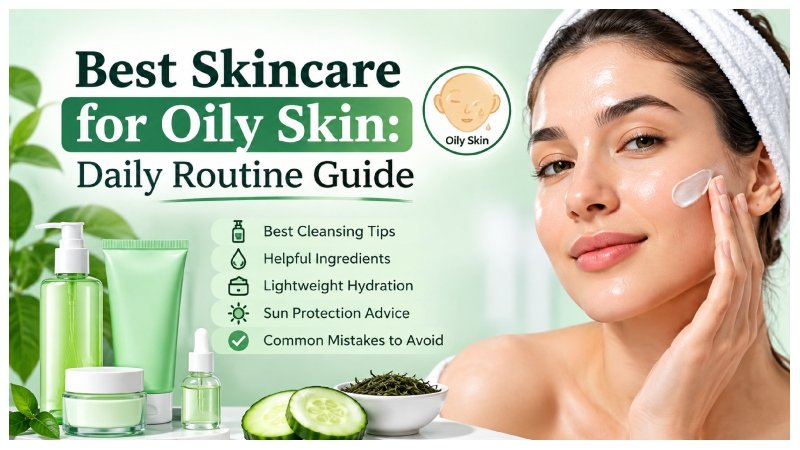
Best Skincare for Oily Skin: Daily Routine Guide

Best Skincare for Oily Skin

A shiny forehead, greasy cheeks, clogged pores, and makeup that disappears by lunchtime can make oily skin frustrating to manage. Many people respond by washing their face repeatedly or using strong products that leave the skin feeling dry and tight. Unfortunately, that approach can create more problems than it solves. The goal is not to remove every trace of natural oil. Your skin needs sebum to stay protected and comfortable. Instead, an effective routine should manage excess oil while preserving hydration and supporting the skin barrier. The best skincare for oily skin starts with a few simple principles: cleanse gently, choose lightweight products, keep the skin hydrated, protect it from the sun, and use targeted ingredients when you have concerns such as clogged pores or breakouts.

This guide explains how to build a practical routine from the ground up. You will also learn which ingredients to consider, which mistakes to avoid, and how to adjust your routine for different oily-skin concerns.

Why Does Skin Become Oily?

Oily skin occurs when the sebaceous glands produce more sebum than the skin needs. Sebum is a natural oil that helps lubricate the skin and supports its protective barrier.

Several factors can affect how much sebum your skin produces. Genetics play a major role, but hormones, age, stress, climate, and skincare habits can also influence oiliness.

Hot and humid weather can make facial oil more noticeable. Sweat can mix with sebum and create a greasy feeling. Hormonal changes can also increase oil production during certain stages of life.

Your skincare routine matters too. Strong cleansers and excessive exfoliation can irritate the skin. When the skin barrier becomes uncomfortable, people often respond by using even more products, creating a cycle of irritation.

It is important to remember that oily skin is not automatically unhealthy. Natural oil has a useful role. The objective is to control excess shine without stripping away the skin’s protective layer.

How Can You Tell If You Have Oily Skin?

Some people assume they have oily skin simply because their face looks shiny during the day. However, temporary shine does not always mean your skin type is oily.

After cleansing, pay attention to how your skin behaves over the next few hours. If most areas of your face become noticeably shiny, you may have oily skin.

If only your forehead, nose, and chin become oily while your cheeks remain normal or dry, you may have combination skin.

There is another possibility that often causes confusion: dehydrated oily skin.

Dehydration means the skin lacks enough water. Oiliness refers to sebum production. You can experience both at the same time.

For example, your face may feel tight immediately after cleansing but become very shiny later. In that situation, using increasingly harsh products may not be the answer. A gentler routine with appropriate hydration may be more helpful.

What Should You Look For in Skincare Products?

Product labels can make choosing skincare easier.

For oily or acne-prone skin, look for terms such as oil-free and non-comedogenic. Non-comedogenic products are designed to be less likely to clog pores, although individual skin reactions can still differ.

Texture also matters. Lightweight gels, fluids, and lotions may feel more comfortable than thick creams.

However, do not judge a product only by its texture. A lightweight product can still contain useful moisturizing ingredients, while a rich product is not automatically harmful.

Think about your main concern before buying anything.

If shine is your biggest issue, focus on gentle cleansing and lightweight hydration. If clogged pores are a problem, consider salicylic acid. If your skin feels irritated or dry, prioritize barrier support.

A simple routine is usually easier to maintain than a shelf full of products.

A Simple Routine for Oily Skin

You do not need a complicated ten-step routine to care for oily skin.

Step Morning Evening Main Purpose
1 Gentle cleanser Gentle cleanser Removes oil and buildup
2 Optional treatment Targeted treatment Addresses specific concerns
3 Lightweight moisturizer Lightweight moisturizer Supports hydration
4 SPF 30+ sunscreen Protects against UV exposure

This basic structure gives you room to customize your routine without overwhelming your skin.

The American Academy of Dermatology recommends gentle cleansing, choosing products labeled oil-free or non-comedogenic when appropriate, and using sunscreen with SPF 30 or higher.

Cleanse Without Stripping Your Skin

Cleansing removes excess oil, sweat, dirt, makeup, and product residue.

For oily skin, it can be tempting to choose the strongest cleanser available. That is not always a good idea.

A cleanser should leave your face clean without creating a tight, uncomfortable feeling. Use lukewarm water and your fingertips rather than scrubbing aggressively.

For most people, cleansing in the morning and evening is enough. You can also cleanse after heavy sweating.

Washing your face repeatedly throughout the day may increase irritation rather than solving the underlying problem. Dermatology guidance generally recommends cleansing up to twice daily and after sweating.

If your face feels extremely tight after washing, reconsider the cleanser before adding another oil-control product.

 Consider Salicylic Acid for Clogged Pores

Salicylic acid is one of the most useful ingredients for oily skin when clogged pores are a concern.

It is a beta hydroxy acid that can help loosen dead skin cells and buildup around pores. This makes it particularly relevant for blackheads and congestion.

However, stronger does not always mean better.

If you are new to salicylic acid, introduce it gradually. Follow the instructions provided with your product and avoid adding several exfoliating ingredients at the same time.

If your skin becomes persistently dry, irritated, red, or uncomfortable, reduce use or stop the product.

Current dermatology-focused guidance also identifies salicylic acid as an option for managing excess oil and clogged pores.

 Try Niacinamide for a Balanced Routine

Niacinamide is another popular ingredient for oily and blemish-prone skin.

It is a form of vitamin B3 and is commonly used in serums and moisturizers. It can support the skin barrier and may help improve the appearance of excess shine and enlarged-looking pores.

One advantage of niacinamide is that it can fit into a relatively simple routine.

If you are already using several active ingredients, however, there is no need to add another product simply because it is popular.

Introduce one product at a time. That makes it easier to understand how your skin responds.

 Use a Lightweight Moisturizer

Skipping moisturizer because your skin is oily is one of the most common skincare mistakes.

Oil and hydration are not the same thing. Your skin can produce plenty of sebum while still lacking adequate water.

A lightweight moisturizer can help keep your skin comfortable without creating a heavy or greasy finish.

Gel moisturizers are often popular with oily-skin users because they tend to feel light. Look for formulas that suit your skin and consider non-comedogenic options if clogged pores are a concern.

Ingredients such as glycerin, hyaluronic acid, and ceramides can support hydration and the skin barrier.

The goal is not to make your face feel completely dry. Comfortable, balanced skin is a better target.

 Never Ignore Sunscreen

Sunscreen is essential even if your main concern is excess oil.

Choose a broad-spectrum sunscreen with SPF 30 or higher. If traditional sunscreens feel greasy, look for lightweight, fluid, gel, or matte-finish formulas.

People with oily or acne-prone skin may also prefer products labeled non-comedogenic.

Apply sunscreen as the final step of your morning skincare routine before makeup.

Daily sun protection helps reduce UV-related skin damage. It is also particularly important if you are dealing with post-breakout dark marks because UV exposure can make discoloration more difficult to manage.

Dermatology guidance recommends broad-spectrum SPF 30 or higher and suggests looking for non-comedogenic formulas when oily or acne-prone skin is a concern.

Best Morning Routine for Oily Skin

Your morning routine can be surprisingly simple.

Start by cleansing your face gently. If you use a treatment serum, apply it according to the product instructions.

Next, use a lightweight moisturizer if your skin needs additional hydration.

Finish with sunscreen.

If your sunscreen already provides enough hydration, you may not need a separate moisturizer underneath it. On the other hand, if your skin feels dry or uncomfortable, a light moisturizer can make the routine more comfortable.

Avoid adding multiple serums just because your face looks oily.

A routine with fewer products is often easier to follow consistently.

Best Night Routine for Oily Skin

Your evening routine should focus on removing the day’s buildup and addressing your main skin concern.

If you wear makeup or water-resistant sunscreen, remove it properly before cleansing.

Then wash your face with a gentle cleanser.

If you use salicylic acid or another treatment, apply it according to the product directions. Do not automatically use an active ingredient every night.

Finish with a lightweight moisturizer.

If your skin feels irritated, simplify the routine for a while. A cleanser and moisturizer may be all you need until your skin feels comfortable again.

Which Ingredients Are Worth Considering?

Different ingredients serve different purposes. You do not need all of them.

Salicylic Acid

Useful when clogged pores, blackheads, and excess oil are major concerns.

Niacinamide

Can support the skin barrier and may help improve the appearance of shine and pores.

Hyaluronic Acid

Provides hydration and can work well in lightweight formulas.

Glycerin

A common moisturizing ingredient that helps attract and retain water in the skin.

Ceramides

Help support the skin barrier and can be useful when your routine includes potentially drying ingredients.

Retinoids

Retinoids can be useful for acne and other skin concerns, but they are active treatments that require careful introduction. If you have persistent acne or are unsure how to use one, professional guidance is a sensible option.

The important lesson is simple: choose ingredients based on your needs rather than trying every trending ingredient at once.

What Should You Avoid?

Managing oily skin is not about avoiding everything. It is about avoiding unnecessary irritation.

Harsh Cleansers

A cleanser that leaves your skin extremely tight may be too aggressive.

Rough Physical Scrubs

Scrubbing harder does not permanently remove oil. It can irritate the skin and make breakouts feel worse.

Excessive Exfoliation

Using several acids, scrubs, and active treatments together can overwhelm your skin.

Heavy Product Layers

Several thick products can make oily skin feel uncomfortable. Simplify your routine when possible.

Constant Product Switching

Changing products every few days makes it difficult to know what is actually helping.

Picking Breakouts

Squeezing pimples can increase inflammation and may contribute to lingering marks or scars.

Common Oily-Skin Mistakes

Washing Your Face Too Often

It is easy to believe that more cleansing means less oil. In reality, frequent washing can irritate the skin.

Stick to a consistent cleansing routine instead.

Skipping Moisturizer

Your skin still needs hydration. Choose a lightweight formula instead of avoiding moisturizer completely.

Using Alcohol-Based Products Aggressively

A strong astringent may make your skin feel instantly less oily, but repeated use can be uncomfortable for some people.

Adding Too Many Actives

You do not need salicylic acid, retinoids, multiple exfoliating acids, and several serums at the same time.

Start with one targeted product.

Ignoring Sunscreen

Oiliness does not protect your skin from UV exposure. Make sunscreen part of your morning routine.

How to Control Shine During the Day

You do not need to wash your face every time you notice shine.

Blotting papers can help remove surface oil without requiring another full cleansing session. Press the paper gently against oily areas instead of rubbing.

Your makeup choices can also affect how shiny your skin looks. Lightweight, non-comedogenic products may feel more comfortable than thick layers.

If your face becomes greasy soon after applying skincare, review the amount and texture of your products.

Sometimes the solution is not a stronger cleanser. It is simply using fewer layers.

How to Care for Oily Skin in Hot Weather

Hot and humid conditions can make oily skin feel more difficult to manage.

During warmer months, lightweight textures can be more comfortable. A gel moisturizer may feel better than a thick cream, while a fluid sunscreen can be easier to wear consistently.

However, hot weather is not a reason to skip moisturizer.

Instead, adjust the texture of your products.

Cleanse after heavy sweating and avoid leaving sweat and buildup on your face for long periods.

If you spend significant time outdoors, be especially consistent with sunscreen and reapply it according to the product instructions and your exposure.

What If You Have Oily and Sensitive Skin?

Oily skin can also be sensitive.

If your face frequently burns, stings, becomes red, or reacts to products, avoid building a routine around strong active ingredients.

Start with the basics:

A gentle cleanser.

A simple moisturizer.

A suitable sunscreen.

Once your skin feels stable, introduce one targeted ingredient at a time.

This approach also makes it easier to identify the cause if irritation develops.

What If You Have Oily Skin and Acne?

Oily skin and acne often appear together, but they are not exactly the same problem.

Excess sebum can contribute to clogged pores, while acne also involves inflammation and other biological factors.

If you experience occasional breakouts, a consistent routine and suitable ingredients may help.

However, painful acne, deep cysts, widespread breakouts, or acne that leaves scars deserves professional attention.

A dermatologist can determine whether you need prescription treatment or a different approach.

Do not continuously switch acne products because you want instant results. Give your routine enough time to evaluate how your skin responds, unless a product causes significant irritation.

How Long Does a New Routine Take to Work?

Skincare requires patience.

Your skin may feel cleaner immediately after washing, but concerns such as clogged pores, breakouts, and uneven texture generally take longer to change.

Give a new routine time before deciding whether it works.

At the same time, do not ignore warning signs. Persistent burning, swelling, severe redness, or significant irritation is not something you need to tolerate while waiting for results.

When introducing a new product, adding it gradually can make the process easier.

Can Oily Skin Become Less Oily?

Your natural skin type is influenced heavily by genetics and hormones, so skincare cannot always change how much sebum your glands naturally produce.

However, you can manage the appearance and feel of excess oil.

Gentle cleansing can remove surface buildup. Lightweight hydration can improve comfort. Suitable active ingredients may help with clogged pores and shine. Sunscreen protects the skin from daily UV exposure.

The objective is better balance rather than completely eliminating oil.

When Should You See a Dermatologist?

Consider professional advice if your skin problem continues despite a consistent routine.

You should especially consider seeing a dermatologist if you have painful or persistent acne, deep cysts, significant scarring, severe irritation, or sudden changes in your skin.

Professional guidance can also help if you are unsure which active ingredients to combine.

A dermatologist can assess your individual skin rather than recommending a generic routine.

A Simple Routine Based on Your Main Concern

Your Main Concern Focus On Avoid
Excess shine Gentle cleansing and lightweight hydration Repeated washing
Blackheads Salicylic acid and consistent cleansing Aggressive squeezing
Occasional breakouts Simple routine with one suitable active Too many treatments
Oily and dry feeling Barrier-supporting moisturizer Harsh cleansers
Oily and sensitive skin Gentle, minimal products Frequent exfoliation
Dark marks after acne Daily sunscreen and suitable treatment Picking breakouts
Makeup becoming greasy Lightweight skincare and makeup Heavy product layers

This approach keeps your routine focused instead of turning skincare into a long list of unnecessary steps.

Final Thoughts

The best skincare for oily skin does not have to be complicated or expensive. What matters most is choosing products that work with your skin instead of constantly fighting it.

Begin with gentle cleansing. Add a targeted ingredient when you have a specific concern. Keep your skin hydrated with a lightweight moisturizer, and protect it every morning with broad-spectrum sunscreen.

Avoid harsh scrubbing, excessive cleansing, and complicated combinations of active ingredients.

Most importantly, learn to listen to your skin. If a product causes persistent irritation, stop and reassess your routine. If acne becomes painful or difficult to control, professional advice may be more useful than another product purchase. Visit my website for more details.

Healthy-looking skin does not mean completely oil-free skin. Natural sebum has an important role in protecting the skin. The real goal is a comfortable, balanced complexion with fewer unnecessary problems.

Start simple, stay consistent, and make changes based on what your skin actually needs.

How to Reach ClearSkinStudy: A Simple Guide for Skincare Readers

How to Reach ClearSkinStudy

People searching for How to Reach ClearSkinStudy may be looking for more information about skincare research, acne-related topics, or the resources available through the ClearSkinStudy online presence. Finding the right information can sometimes feel difficult when several websites and search results appear for the same topic.

ClearSkinStudy is associated with online skincare content that discusses common concerns such as acne, pimples, blackheads, whiteheads, and other skin-related issues. Readers who want to learn more should focus on finding reliable information and understanding the purpose of the website or resource they are visiting.

This guide explains what ClearSkinStudy is, how to find the right online resources, what to check before using information, and how readers can approach skincare-related content responsibly.

What Is ClearSkinStudy?

ClearSkinStudy is an online skincare-focused resource that discusses acne and other common skin concerns. Its content covers subjects related to skin appearance, acne problems, and general skincare education.

People may discover ClearSkinStudy while searching for information about breakouts, acne-prone skin, or ways to understand common skin problems.

However, readers should remember that online skincare information can serve different purposes. Some pages provide general education, while others may discuss research, products, or specific skincare approaches.

Understanding this difference helps readers decide how to use the information they find.

How to Reach ClearSkinStudy Online

The simplest way to find ClearSkinStudy is through its online presence.

Readers can search for the exact name and review the available website results before opening a page. Checking the domain name is important because websites with similar names can appear in search results.

You should also examine the page title and content before assuming that a page belongs to the source you intended to find.

When searching for How to Reach ClearSkinStudy, focus on reliable website information rather than relying on random directories, social media posts, or copied contact pages.

The official-looking ClearSkinStudy website contains skincare-related content and provides information about acne and related subjects.

Why People Search for ClearSkinStudy

Different readers can have different reasons for looking for ClearSkinStudy.

Some people may want to understand acne and common skin concerns. Others may have discovered a ClearSkinStudy page through a search engine and want to learn more about the information behind it.

A reader might also search for the platform after seeing a skincare-related reference online.

The reason behind the search matters because it determines which information is most useful.

Someone researching acne needs educational skincare information. Someone looking for a particular study needs study-specific details. Someone interested in general skincare may benefit from broader information about skin health.

What Information Can You Find?

ClearSkinStudy-related content can help readers explore different skincare subjects.

Common topics include acne, pimples, blackheads, whiteheads, inflammation, and other visible skin concerns.

Readers can use this type of content as a starting point when learning about skincare terminology and common problems.

However, online articles should not replace professional medical advice. Skin conditions can have different causes, and the same skincare approach may not work for everyone.

If a skin problem is persistent, painful, severe, or getting worse, speaking with a qualified healthcare professional can provide more appropriate guidance.

How to Find Reliable Skincare Information

Finding a website is only the first step. You should also evaluate the quality of the information you read.

Look for content that explains its claims clearly and avoids unrealistic promises.

Reliable skincare content should distinguish between general information and professional medical advice. It should also avoid suggesting that one product or method can solve every skin problem.

Pay attention to the date of the content as well. Skincare knowledge and product recommendations can change over time.

When an article discusses a specific medical condition or treatment, readers should consider whether the information comes from an appropriate professional or credible source.

Check the Purpose of the Website

Before using information from ClearSkinStudy or any other skincare website, consider why the page exists.

Some websites focus on education. Others promote products, services, studies, or commercial partnerships.

Understanding the purpose of a page gives readers more context.

For example, an educational article may explain why acne develops, while a commercial page may focus primarily on a particular product.

Neither type of content is automatically useless. The important thing is understanding the difference and making decisions based on balanced information.

Be Careful With Skincare Claims

Skincare is one of the areas where exaggerated claims appear frequently online.

Statements promising instant results, permanent solutions, or guaranteed outcomes should receive extra attention.

Skin changes gradually for many people. Results can depend on age, skin type, genetics, lifestyle, existing conditions, and the products being used.

A responsible reader should avoid changing an established skincare routine solely because of one dramatic claim online.

Instead, compare information from reliable sources and consider whether the recommendation fits your individual situation.

ClearSkinStudy and Acne Education

Acne is one of the most common reasons people search for skincare information.

It can appear in different forms, including whiteheads, blackheads, papules, pustules, and deeper inflammatory lesions.

Understanding the type of acne can help people learn more about appropriate skincare approaches.

Basic skincare habits can also support healthier-looking skin. Gentle cleansing, avoiding excessive scrubbing, and choosing products suitable for your skin type can help reduce unnecessary irritation.

However, persistent or severe acne may require professional evaluation.

Educational resources can help you understand the subject, but they cannot determine the exact cause of an individual’s skin condition.

Why Search Intent Matters

The phrase How to Reach ClearSkinStudy suggests that the reader wants to locate or access a particular online resource.

That means the most useful information should focus on helping readers find the correct website and understand what they can expect after reaching it.

An article that only repeats contact details would provide limited value.

A better approach explains how to identify the relevant source, evaluate its information, and use skincare content responsibly.

This also helps readers who arrive through search engines with slightly different questions about ClearSkinStudy.

How to Approach Online Skincare Resources

A simple research process can make online skincare searches more useful.

Start with the exact name of the website or resource you are looking for. Check the domain carefully before reading further.

Then review the main categories and recent articles. This can help you understand the website’s focus.

Next, compare important health-related claims with reliable medical or dermatological sources.

Finally, avoid making major skincare decisions based on a single article.

This approach encourages readers to become informed rather than simply following every recommendation they encounter online.

When Should You Speak With a Professional?

Online skincare information can be useful for general education, but some situations require professional guidance.

Consider speaking with a dermatologist or qualified healthcare professional if acne becomes severe, painful, persistent, or starts leaving significant scars.

Professional advice can also help when over-the-counter products cause significant irritation or when a skin problem does not improve.

A professional can evaluate your individual symptoms and recommend an appropriate approach.

This is especially important because several skin conditions can look similar while requiring different treatments.

Frequently Asked Questions

What is ClearSkinStudy?

ClearSkinStudy is an online skincare-focused resource that discusses topics related to acne and common skin concerns.

How can I find ClearSkinStudy?

Search for the exact ClearSkinStudy name and check the website domain before opening or relying on a page. The main website currently publishes skincare-related information.

What topics does ClearSkinStudy cover?

ClearSkinStudy-related content discusses subjects such as acne, pimples, blackheads, whiteheads, and other skincare concerns.

Is ClearSkinStudy useful for skincare research?

It can serve as one source of general skincare information. Readers should compare health-related claims with reliable professional sources before making treatment decisions.

Can online skincare information replace a dermatologist?

No. General online information can help people understand skincare topics, but it cannot replace an individualized evaluation from a qualified healthcare professional.

Why should I verify skincare information?

Skincare advice can vary significantly between sources. Checking the quality, purpose, and supporting evidence of information can help you avoid misleading or exaggerated claims.

What should I do about persistent acne?

If acne continues, becomes painful, or causes scarring, consider speaking with a dermatologist or another qualified healthcare professional for personalized guidance.

My Final Thoughts  About How to Reach ClearSkinStudy

Searching for How to Reach ClearSkinStudy can be a useful starting point for readers interested in acne and skincare information. The key is to identify the correct online resource and evaluate the information carefully.

ClearSkinStudy-related content can help readers explore common skincare subjects, but online information should be treated as educational rather than a replacement for professional medical advice.

Before following a skincare recommendation, consider your individual skin needs, check the reliability of the information, and avoid unrealistic promises.

For persistent or serious skin concerns, professional guidance remains the safest way to understand the problem and choose an appropriate approach. Click here for more information.